
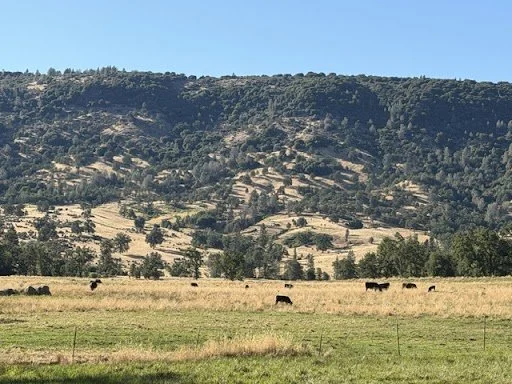
“This ranch is about 5,200 acres, and that’s usually one of the first things people want to know. “How big is it?” But the longer you’re here, the less that number seems to matter. Because you don’t remember acres. You remember what happened on them.” Shannon Wooten
5,260 Acres Protected Forever
Introducing Bonnie Craigs Ranch
For more than 150 years, the same family has cared for Bonnie Craigs Ranch.
Across generations, this land has been shaped by ranching, hard work, family traditions, and a deep knowledge of the landscape. It is a place where cattle graze beneath oak woodlands, creeks wind through the property, wildlife move across open spaces, and generations of memories have been made.
Now, that legacy will continue.
Through an agricultural conservation easement with Shasta Land Trust, Bonnie Craigs Ranch will remain protected for generations to come, preserving an extraordinary landscape that supports agriculture, wildlife, water, and the surrounding community.
A Landscape Connected by Water
Water is woven throughout Bonnie Craigs Ranch. Four creeks, including Bear Creek and Snow Creek, at least 17 natural springs, and approximately 15 miles of seasonal streams and drainages flow across the property.
These waterways eventually connect to the Sacramento River watershed. Bear Creek also provides important habitat for fall-run Chinook salmon and steelhead, making the protection of this landscape important far beyond the ranch itself.
A Home for Wildlife
The ranch's diverse habitats include oak woodlands, annual grasslands, forests, riparian areas, and wet meadows. Together, they provide food, water, shelter, and room to roam for an incredible variety of wildlife.
Black-tailed deer, bald eagles, osprey, wild turkeys, bears, bobcats, amphibians, and many other species all depend on landscapes like Bonnie Craigs to thrive.
Protecting large, connected areas of habitat helps ensure these species continue to have a place in Northern California's future.
Keeping Working Lands Working
Bonnie Craigs is more than open space. It remains an active cattle ranch and an important part of Shasta County's agricultural landscape.
Grazing, prescribed fire, and thoughtful vegetation management are used to support agricultural production while also contributing to the health and resilience of the land. Protecting the ranch through an agricultural conservation easement allows these traditions to continue while ensuring the property remains conserved into the future.
A Ranch That Gives Back
Over the years, Bonnie Craigs Ranch has also played an important role in the broader community.
The property has supported agricultural research and education, wildfire training, youth hunting opportunities, and efforts to strengthen community wildfire resilience. It has even served as a designated evacuation area for large vehicles and livestock during emergencies.
These connections are a reminder that conserving working lands can benefit far more than the plants and wildlife found within their boundaries. These places are part of the fabric of our community.
Made Possible Through Conservation
Protecting a place like Bonnie Craigs doesn't happen overnight, and it doesn't happen alone.
Projects like this require years of partnership, planning, funding, and a shared commitment to conservation. Most importantly, they begin with willing landowners who make the extraordinary decision to protect the land they love for the future.
Support for Shasta Land Trust gives us the capacity to build those relationships, pursue conservation opportunities, and care for protected lands for generations to come.
We are deeply grateful to the landowners for their commitment to Bonnie Craigs Ranch and to everyone who supports Shasta Land Trust's mission to conserve the beauty, character, and diversity of significant lands in Northern California.
Because of this shared commitment, Bonnie Craigs Ranch can remain a place where cattle graze, creeks flow, wildlife roam, and new generations continue to make memories on the land.
Forever protected. Forever part of our North State landscape.
Funding for the agricultural conservation easement was made available through the California Strategic Growth Council's Sustainable Agricultural Lands Conservation Program (SALC), in collaboration with the California Department of Conservation. SALC is part of California Climate Investments, a statewide initiative that invests in projects that reduce greenhouse gas emissions, strengthen the economy, and improve public health and the environment.